

How Has Generative AI Changed the Phishing Landscape?
Traditional phishing defenses relied on obvious visual indicators: broken grammar, awkward phrasing, mismatched sender names, or suspicious generic salutations. Generative AI has permanently eliminated those structural giveaways. Modern large language models draft flawless, contextually fluent correspondence in any corporate language, adopting nuanced business tone with zero manual editing.
The fundamental shift lies in the collapse of attack economics. In a large-scale controlled field study conducted by BIFOLD, TU Berlin, Inria, and Ruhr University Bochum involving 7,741 participants, personalized AI-generated phishing emails achieved 2.4 times the click rate of human-written generic phishing messages (10.0% versus 4.1%). The researchers established that automated personalization using language models costs approximately $0.03 per email. By harvesting open-source intelligence from corporate websites, professional directories, and public records, automated pipelines now generate hyper-tailored spear phishing lures at industrial scale.
| Phishing Vector | Lure Generation Cost | Measured Click Rate |
|---|---|---|
| Generic Broadcast Phishing | Fraction of a cent per batch | 3.7% (LLM-written) to 4.1% (human-written) |
| Human-crafted Spear Phishing | Manual analyst research and writing per target, so only 100 such emails were sent in the study | 24.2%, the highest measured rate, but not producible at this scale or price |
| Automated AI Spear Phishing | ~$0.03 per email via automated OSINT enrichment | 10.0%, nearly triple the generic baseline |
Because AI-generated lures blend seamlessly into everyday corporate workflows, telling employees to look for suspicious spelling mistakes is no longer an effective security strategy. Defense requires training users to interrogate context, workflow logic, and verification channels rather than cosmetic formatting.
Why Are Deepfakes and Multi-Channel Attacks So Dangerous?
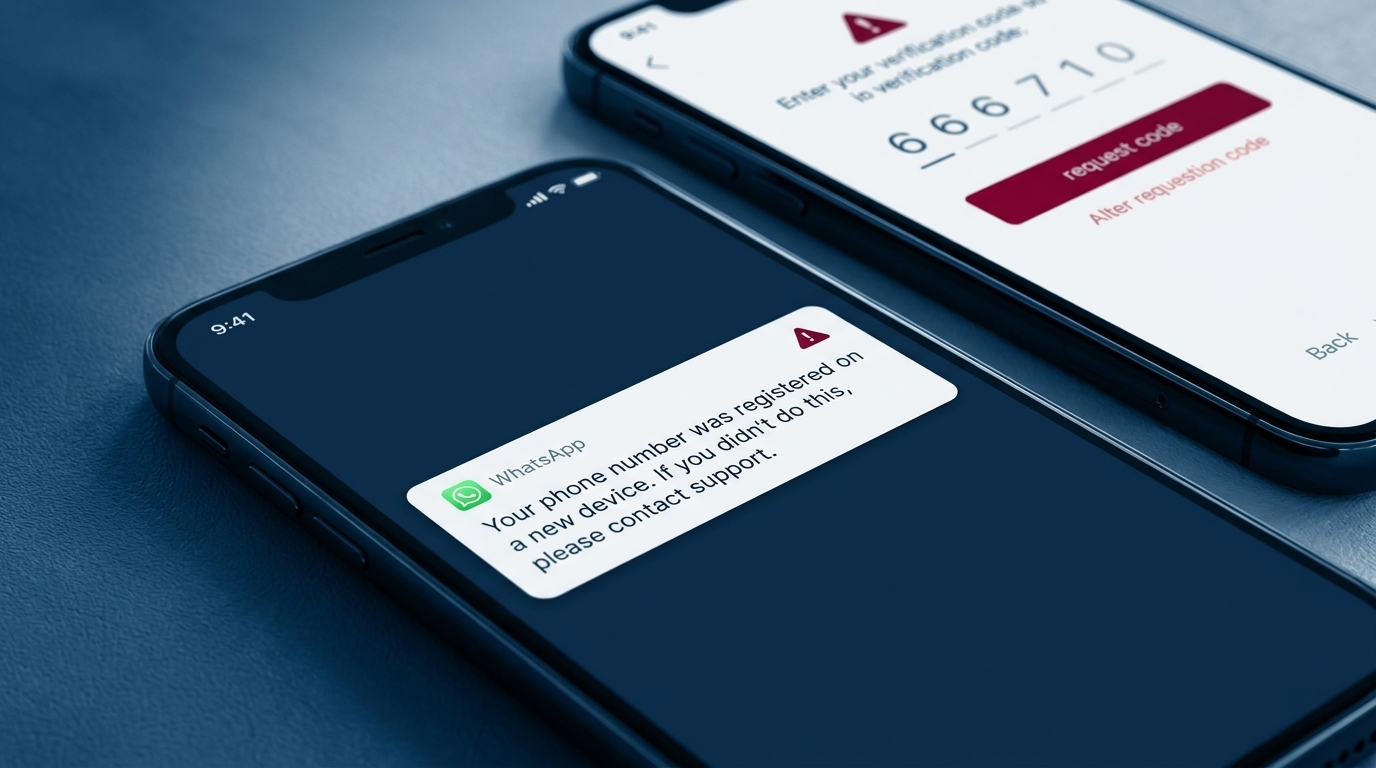
Threat actors no longer confine their campaigns to isolated email threads. Modern social engineering relies on orchestrated multi-channel sequences: an email alert is preceded by an SMS notification and followed immediately by an AI voice call to establish cumulative trust.
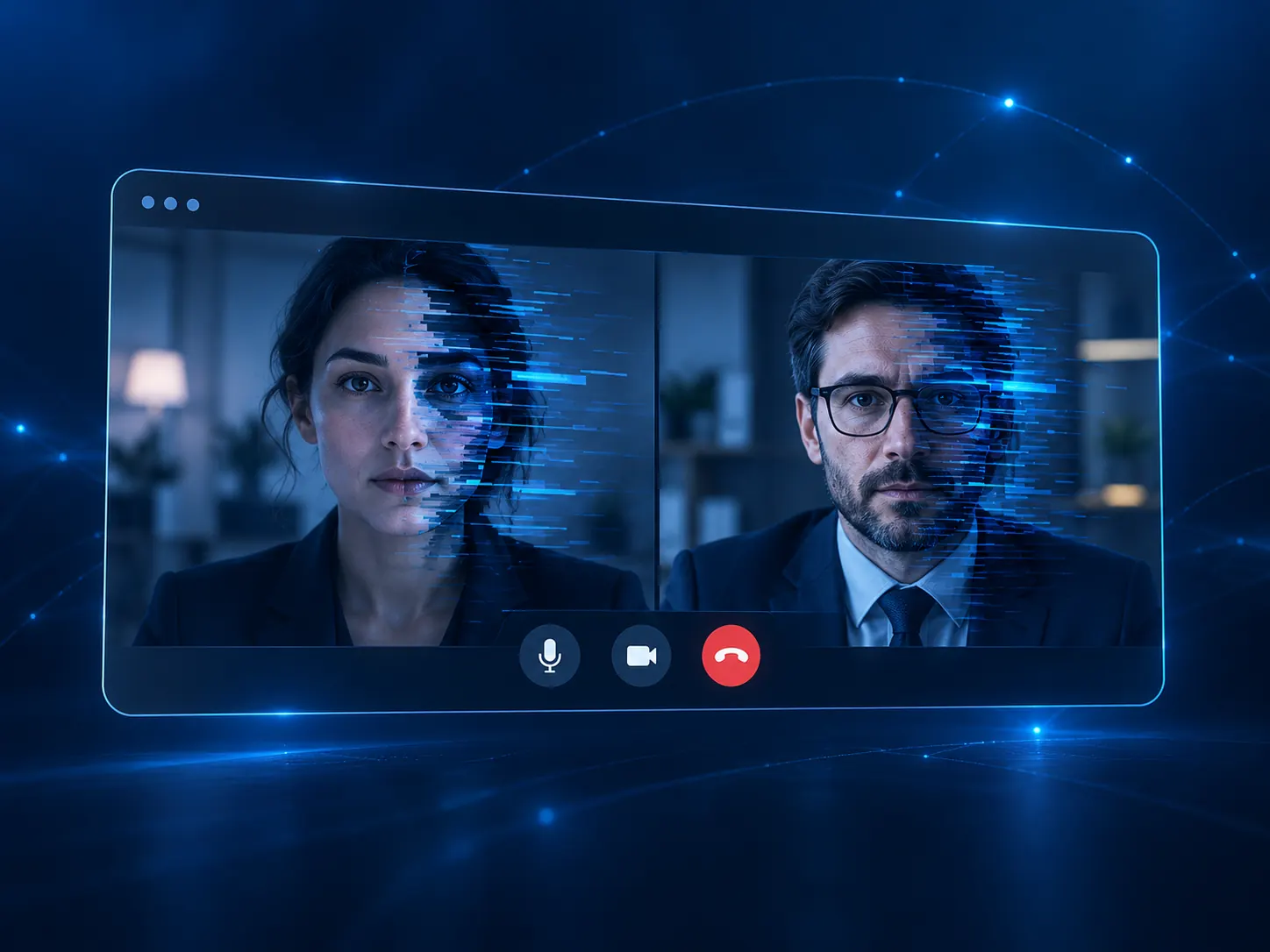
Voice cloning technology now synthesizes convincing executive voices from brief public audio samples extracted from earnings calls, interviews, or conference recordings. Attackers deploy automated voice phishing (vishing) and deepfake video avatars to impersonate executive leadership and authorize urgent wire transfers, credential changes, or OAuth app consents. In targeted advisories, the FBI Internet Crime Complaint Center (IC3) has warned organizations that malicious actors actively combine text messaging (smishing) with AI-generated voice messages to establish rapport and harvest authentication credentials.
- Cross-channel trust transfer: Attackers prime targets via SMS or messenger before delivering a malicious link via email or voice.
- Multi-channel cognitive overload: Analysis from enterprise attack datasets shows a 10x higher likelihood of non-protective actions when employees face multi-channel attack schemas compared to single-channel email lures.
- Execution-driven manipulation: Techniques such as ClickFix lure users into running terminal commands or pasting clipboard payloads under the pretext of fixing conference or meeting errors.
When employees receive a corroborating phone call or chat message confirming an email request, psychological verification heuristics break down. Traditional email filters cannot protect against off-channel voice or messenger interactions, making multi-channel employee simulation essential.
Why Does Annual Security Awareness Training Fail?
Most organizations still rely on annual compliance modules: 45-minute video presentations followed by a mandatory multiple-choice quiz. Cognitive science and empirical security research prove that this model does not build defensible security habits.
The Ebbinghaus forgetting curve demonstrates that unreinforced information degrades rapidly within days. In a field investigation at a German public administration organization with 409 employees, researchers found that staff still identified phishing and legitimate emails significantly better four months after the awareness program was deployed, but that this improvement had disappeared after six months, making reminders necessary. An annual training cadence therefore leaves organizations exposed for months of every calendar year.
- Passive engagement: Based on our analysis of over 100,000 platform simulations, over 75% of employees engage with static security training modules for less than one minute, rushing through slides to satisfy compliance checkmarks.
- Misaligned metrics: Click rate alone is a flawed indicator of organizational security; our platform data shows approximately 89% of employees who click a simulated phishing link never actively report it to their security operations team.
- Static templates: Outdated quarterly email templates fail to prepare staff for dynamic, polymorphic AI-generated scenarios that adapt to live conversation threads.
Security awareness must transition from an annual administrative chore to continuous, in-the-moment reinforcement delivered directly within employee operational routines.
How Do NIS-2 and ISO 27001 Impact Training Requirements?
Regulatory frameworks across the European Union have evolved from formal compliance checklists to enforceable requirements for operational cyber resilience. Under the German NIS-2 Implementation Act (NIS2UmsG) amending the Federal Office for Information Security Act (BSIG), effective since December 2025, approximately 29,500 German institutions face direct statutory obligations.
Section 30 (2) BSIG lists the minimum risk-management measures essential and important entities must implement, and training covering cybersecurity and cyber hygiene is one of them. Crucially, Section 38 BSIG establishes explicit management approval, monitoring, and training obligations, holding corporate managing directors personally liable for breaches. For mid-market enterprises (Mittelstand) categorized as important entities, administrative fines reach up to EUR 7 million or 1.4 percent of global prior-year turnover, whichever is higher.
| Framework | Key Human Risk Requirement | Compliance Evidence Needed |
|---|---|---|
| NIS-2 / BSIG (§ 30, § 38) | Training covering cybersecurity and cyber hygiene as a minimum measure, plus management approval and monitoring | Audit-ready logs of simulation participation, executive training records, and incident reporting metrics |
| ISO/IEC 27001:2022 (Control 6.3) | Information security awareness, education, and continuous role-based training | Documented training paths, threat verification procedures, and behavioral improvement records |
| DORA (Regulation (EU) 2022/2554) | Mandatory ICT security awareness programs for financial sector staff and executives | Continuous simulation testing, threat intelligence integration, and resilience reporting |
To satisfy external auditors and regulatory oversight under NIS-2 and ISO 27001, security leaders must demonstrate continuous threat simulation, automated participation logging, and measurable reporting improvements across their workforce.
How Can Companies Balance Realistic Simulations With Privacy?
Deploying OSINT-enriched attack scenarios presents unique legal and operational considerations in the DACH region. Security leaders must align realistic training with strict European data privacy laws and employee co-determination rights.
In Germany, employee performance monitoring falls under the mandatory co-determination rights of the works council (Betriebsrat) pursuant to Section 87 (1) No. 6 of the Works Constitution Act (BetrVG). Implementing a security simulation program requires establishing a clear company agreement (Betriebsvereinbarung). Negotiating this framework requires technical safeguards that prevent individual behavioral tracking.
- Cohort-based reporting anonymization: To technically preclude individual monitoring, analytics should pool performance data by department, maintaining a minimum cohort size of five employees.
- Ethical simulation boundaries: Avoid manipulative psychological triggers such as fake bonus payouts, salary adjustments, or termination notices to maintain workforce trust and works council approval.
- Localized data sovereignty: Guaranteeing that internal data never trains third-party AI models requires hosting simulation platforms on dedicated EU-based infrastructure (like STACKIT) under strict GDPR protocols.
- Explicit executive consent: Ensure voice cloning and deepfake simulation assets for leadership figures are produced only with explicit written consent and processed inside secure customer tenants.
When security teams proactively embed group anonymization and sovereign hosting into their program architecture, works council approval timelines shrink from months to weeks.
How Can CISOs Build Lasting Human Resilience Against AI?
Defending against AI-powered social engineering requires abandoning passive compliance videos in favor of continuous, adaptive real-time microtraining. When an employee interacts with a realistic simulation, delivering an immediate learning moment at the point of failure drives lasting behavioral retention.
Building an effective defense requires three foundational shifts in security strategy: expanding simulations across email, voice, SMS, and messaging; tailoring difficulty dynamically to individual risk profiles; and prioritizing threat reporting rates over simple click rates as the primary security KPI.
- Continuous adaptive playlists: Replace generic monthly blasts with individualized playlists that automatically adjust simulation frequency and complexity based on employee reporting history.
- Multi-channel attack replication: Expose staff to realistic multi-stage scenarios across email, vishing calls, SMS, and collaboration tools based on live threat intelligence data security simulations.
- Reporting culture focus: Track the ratio of reported threats to clicked lures, transforming employees into active sensors that alert the SOC within minutes of an incident.
The revel8 Platform delivers this unified human defense by integrating automated OSINT risk profiling, adaptive multi-channel attack simulations across email, SMS, voice cloning, and deepfake video, and interactive micro-learning paths hosted entirely on sovereign German infrastructure. By automating real-world threat replication without administrative overhead, security leaders can quantify human risk, satisfy NIS-2 compliance, and establish resilient behavioral defenses across the enterprise.
This article was created with the help of AI.