

Proofpoint vs. revel8: The Core Architectural Difference
Legacy security awareness platforms were built for an era when phishing arrived almost exclusively through enterprise email gateways. Proofpoint itself was taken private by software investment firm Thoma Bravo in a deal completed on 31 August 2021 for approximately $12.3 billion in cash. Its ZenGuide awareness product remains anchored on the company's email threat telemetry, and for enterprises deeply integrated into Proofpoint's email protection suite that provides automated mapping between blocked gateway threats and user risk scores.
However, modern social engineering extends far beyond inbound inbox filters. Rather than relying on static template libraries or gateway-only telemetry, modern human risk platforms combine live threat intelligence with OSINT risk profiling to evaluate an organization's public attack surface. By synthesizing data from public registers, executive social profiles, and corporate infrastructure, simulations mirror the exact reconnaissance techniques deployed by sophisticated threat actors.
| Architecture Dimension | Proofpoint ZenGuide | revel8 Platform |
|---|---|---|
| Core Engine & Origin | Legacy ZenGuide codebase (ex-Wombat acquisition) | AI-native simulation matrix founded in 2024 |
| Threat Telemetry Basis | Trillion-scale inbound email & URL telemetry | Live organizational OSINT & cross-channel threat intelligence |
| Simulation Channels | Email-centric; limited third-party SMS options | Email, SMS, voice (vishing), messenger, and deepfake video |
| Data Residency & Sovereign Cloud | US parent jurisdiction; global hyperscaler hosting | German cloud hosting on STACKIT; fully GDPR-compliant |
| Works Council Anonymization | Requires manual policy configuration | Default cohort anonymization (minimum group size of 5) |
Multi-Channel Threats: Beyond Traditional Email Scenarios
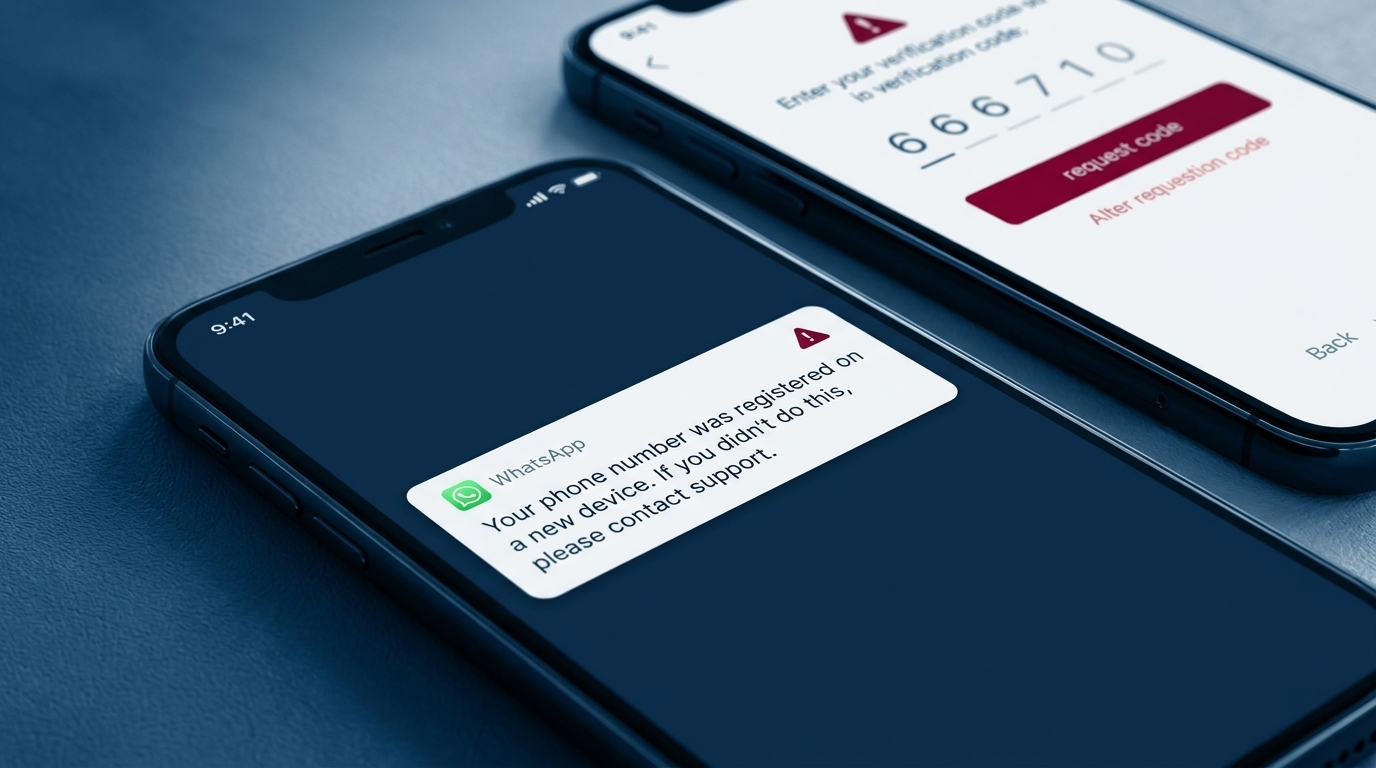
Threat actors no longer confine their social engineering campaigns to standard phishing emails. Mandiant's M-Trends 2026 report finds that voice phishing (vishing) surged to 11% of intrusions, making it the second most commonly observed initial infection vector, while email phishing declined from 14% in 2024 to 6% in 2025. Attackers routinely combine preliminary email lures with cloned voice calls, SMS messages, and simulated video meetings to bypass multi-factor authentication and compromise high-privilege targets.
Legacy platforms like Proofpoint ZenGuide rely primarily on email template libraries and lack native deepfake video and automated voice phishing engines. When security teams attempt to address multi-channel risk using traditional tools, they must stitch together disparate third-party services, creating inconsistent reporting metrics and gaps in employee readiness.
Delivering continuous microtraining across every active attack surface requires a dynamic scheduling architecture. By deploying an Awareness Playlist, organizations expose employees to realistic, role-specific scenarios across email, voice calls, text messaging, and interactive video conferencing directly in the flow of work.
- Voice Phishing (Vishing): Simulated phone calls replicating target executive voices or IT service desk support workflows to test identity verification procedures.
- Multi-Channel Messaging: Coordinated phishing sequences spanning corporate email, SMS, and Instant Messaging platforms.
- Deepfake Video Scenarios: Interactive video meeting simulations designed for high-value targets and financial authorization personnel.
Administrative Rigidity vs. Automated Resilience
Security teams running legacy security awareness programs face substantial administrative overhead. Reviewers on Gartner Peer Insights describe the ZenGuide awareness training component as somewhat rigid, noting that it lacks flexibility and that the inability to make changes once a campaign or training is already in progress limits its adaptability. Constructing multi-language campaigns in Proofpoint also requires administrators to generate separate campaign configurations per language group.
This administrative burden forces lean security teams to spend valuable hours managing campaign schedules, updating static email templates, and manually mapping users to specific language tiers. In fast-growing European enterprises, managing localized training across multiple subsidiaries quickly becomes unsustainable.
Automated engines eliminate manual scheduling by continuously adapting simulation difficulty and microtraining modules based on individual employee risk profiles. This approach was demonstrated at Alexander Bürkle, where automated scheduling maintained continuous employee engagement across nearly 900 staff members without increasing administrative overhead.
Navigating DACH Data Sovereignty and The CLOUD Act
For Chief Information Security Officers in the DACH region, technical capability is only half of the evaluation criteria. Data residency and legal jurisdiction represent critical compliance constraints. US-headquartered security vendors, regardless of where their data centers are physically located in Europe, remain subject to the US CLOUD Act and Foreign Intelligence Surveillance Act (FISA) Section 702.
Under the CLOUD Act, US federal authorities can compel US parent companies to disclose customer data stored on foreign servers without notifying the affected European data controller. For regulated entities in financial services, healthcare, and critical infrastructure, storing detailed employee behavioral data, click histories, and security profiling on US-controlled infrastructure introduces unavoidable regulatory friction under GDPR.
Mitigating data sovereignty risk requires infrastructure hosted by native European cloud providers. By listing on the STACKIT Marketplace, platform operations run entirely on sovereign German cloud infrastructure provided by Schwarz Group, guaranteeing strict European legal protections and full independence from non-EU legal orders.
- Sovereign Cloud Hosting: Infrastructure hosted on STACKIT in Germany under European jurisdiction.
- Tenant Isolation: Customer data processing is strictly isolated within the customer tenant and never utilized to train public AI models.
- GDPR & ISO 27001 Compliance: Native alignment with European data protection directives and ISO/IEC 27001:2022 standards.
Winning Works Council (Betriebsrat) Approval
Deploying security awareness training across German enterprises requires formal agreement with local works councils (Betriebsrat). Under Section 87 of the German Works Constitution Act (BetrVG), works councils hold mandatory co-determination rights regarding systems that measure or monitor employee behavior and performance. Non-localized US platforms often struggle during Betriebsvereinbarung negotiations due to individual performance tracking and lack of native privacy controls.
Overcoming works council objections requires built-in privacy controls that prevent individual monitoring while providing executive leadership with actionable risk visibility. Platforms that implement default group-level reporting anonymization with a minimum group size of five ensure individual employee simulation outcomes remain strictly confidential.
Protecting individual privacy does not compromise regulatory compliance. By aggregating employee metrics into anonymized benchmarks like the Human Firewall Index, security teams maintain audit-ready logs for NIS-2 and ISO 27001 requirements while expediting Betriebsvereinbarung approvals. This structured privacy framework ensures full compliance with German NIS2 requirements.
- Default Group Anonymization: Metrics aggregated across cohorts of five or more employees to safeguard worker privacy.
- Ethical Simulation Guidelines: Exclusion of sensitive triggers such as fake executive bonuses or termination notices.
- Audit-Ready Logs: Automated compliance evidence generation for NIS-2, DORA, and ISO 27001 audits.
The Honest Verdict: Which Platform Fits Your Organization?
Choosing between Proofpoint Security Awareness and a modern European alternative comes down to organizational architecture, existing technology investments, and compliance mandates. Neither platform is a universal answer for every enterprise context.
Proofpoint ZenGuide is the optimal fit for global organizations already running the complete Proofpoint email security stack. When an enterprise relies heavily on Proofpoint's email gateway protection and seeks centralized threat telemetry integrated into People-Risk-Explorer, extending that ecosystem to security awareness provides administrative consolidation across email defense.
Conversely, DACH organizations operating under strict data sovereignty requirements, facing active Betriebsrat oversight, or seeking defense against sophisticated multi-channel and deepfake attacks will find greater alignment with the revel8 Platform. By combining German sovereign cloud hosting on STACKIT with automated multi-channel simulations, European security leaders can build verifiable human resilience without administrative burden.
To evaluate how your workforce responds to modern social engineering techniques across email, voice, and messaging channels, schedule a live multi-channel simulation assessment or request a platform demonstration today.
- Select Proofpoint ZenGuide if: Your enterprise is already standardized on Proofpoint email protection and requires unified gateway-to-awareness telemetry.
- Select the revel8 Platform if: Your organization requires German data sovereignty (STACKIT), automated works council privacy controls, and native deepfake and multi-channel simulation capabilities.