

Why Is the Threat Landscape Demanding Multi-Channel Realism?
Enterprise social engineering has transformed from primitive credential harvesting into complex, multi-stage operations. Data from the Unit 42 Global Incident Response Report indicates that 36% of all analyzed incident response cases began with a social engineering tactic, establishing it as the most frequent initial access vector in modern enterprise intrusions. Adversaries no longer rely solely on generic email phishing blasts. Instead, they exploit identity workflows, telephone systems, and enterprise communication channels to bypass conventional email gateway controls.
A primary driver of this shift is the rapid escalation in voice phishing and deepfake technology. According to threat research documented in the CrowdStrike Global Threat Report, voice phishing attacks surged by 442% between the first and second halves of 2024. This explosive growth rate is reflected in its overall share of incidents: Mandiant's M-Trends 2026 report found that voice phishing climbed to 11% of all intrusions, becoming the second most common initial infection vector, while traditional email phishing declined to 6%. McAfee Labs researchers found that just three seconds of audio was enough to produce a clone with an 85% match to the original voice, meaning a short public recording of an executive or IT help desk agent is sufficient source material. When combined with open-source intelligence gathered from professional networks and public directories, attackers execute coordinated campaigns across SMS, voice calls, and direct messaging applications.
Traditional security awareness programs that focus exclusively on simulated email inbox testing leave substantial defensive blind spots. When adversaries initiate contact through an email lure and follow up with an urgent phone call or Microsoft Teams message, employees facing single-channel training fail to recognize the connected sequence. Defending modern organizations requires continuous exposure across every attack vector that adversaries actively exploit.
- Email lures paired with telephone-oriented attack delivery (TOAD) to initiate remote access tool installations.
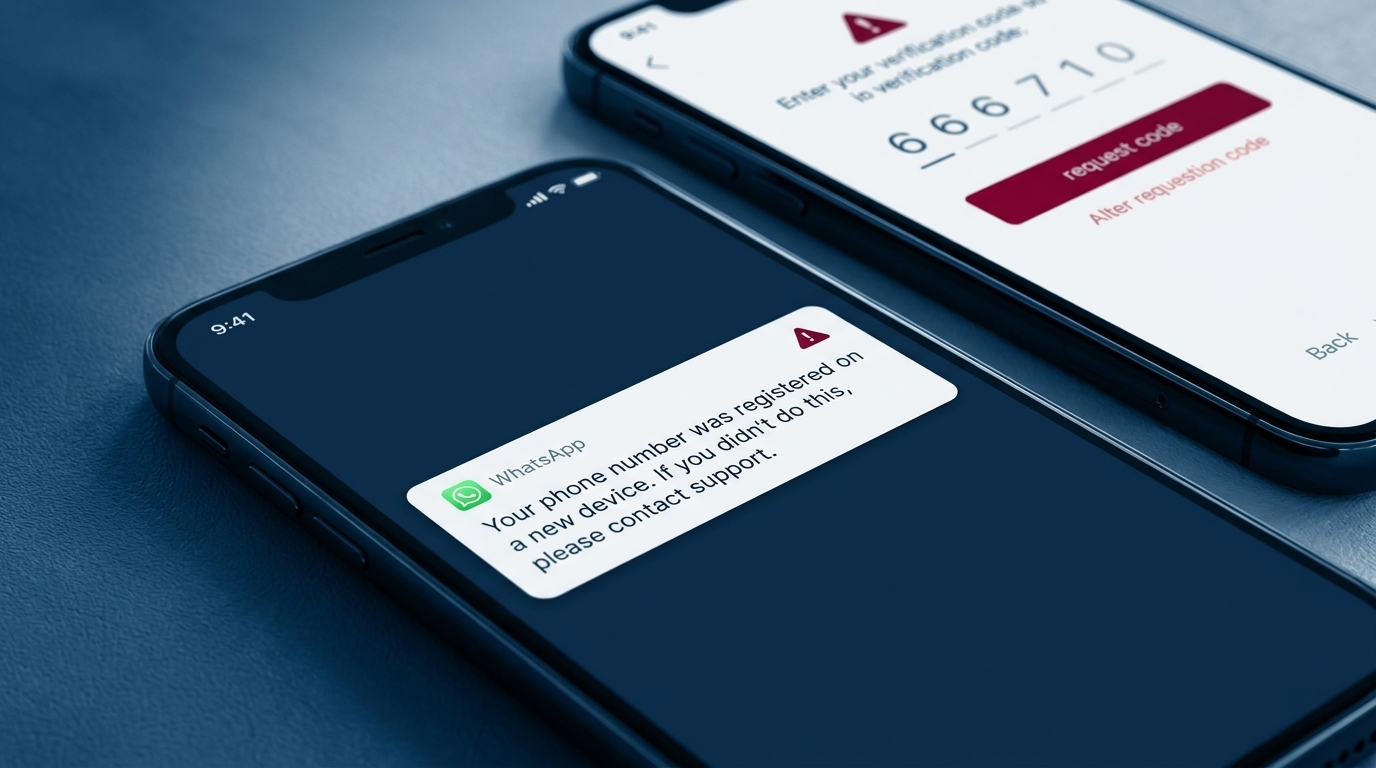
- SMS-based authentication prompts (smishing) designed to intercept session tokens and multi-factor authentication codes.
- AI-generated synthetic voice calls impersonating C-suite executives, suppliers, or IT support desks.
- Video meeting impersonation and QR-code-based credential harvesting that evade standard corporate proxy filters.
How Realistic Are the Attack Simulations?
When evaluating awareness platforms, security leaders must assess how simulation content is generated and maintained. Static template libraries quickly become predictable, training users to spot known templates rather than developing an intuitive suspicion of novel manipulation techniques. High-fidelity simulations must incorporate OSINT data and real-time threat intelligence to mirror the exact reconnaissance that threat actors conduct prior to an intrusion.
Realism does not mean employing deceptive, morale-damaging tactics. Unethical triggers such as fabricated holiday bonuses, simulated salary deductions, or fake termination notices erode internal trust and damage the security team's relationship with employees. Ethical realism focuses on authentic professional workflows: urgent vendor payment verifications, cloud identity re-authentication requests, shared document notifications, and software update prompts.
| Evaluation Criterion | Legacy Training Platforms | Modern AI-Driven Platforms |
|---|---|---|
| Attack Channels | Restricted primarily to email phishing templates | Multi-channel coverage across email, SMS, voice, and deepfakes |
| Content Generation | Static libraries updated on quarterly or annual cycles | Dynamic generation adapted from live OSINT and emerging threat data |
| Contextual Relevance | Generic corporate templates distributed to all departments | Role-specific lures tailored to finance, HR, executive, and IT teams |
| Ethical Guardrails | Unfiltered shock triggers (e.g., fake bonuses or terminations) | Strict policy guardrails focusing strictly on legitimate enterprise pretexts |
| Intelligence Freshness | Months-long lag between new attack trends and training content | Rapid deployment of newly observed threat actor techniques |
Technical realism must also extend to payload mechanics. Adversaries increasingly deploy techniques such as ClickFix, which trick employees into pasting malicious terminal commands or executing PowerShell scripts under the guise of fixing meeting join errors. Simulations must reflect these evolving mechanics so users experience current adversary playbooks before facing a live incident.
Does the Training Measure Behavior Change or Just Completion?
For years, security awareness has been managed as a compliance checkbox where a near-universal course completion rate was celebrated as success. However, annual or quarterly compliance modules create a temporary spike in awareness that rapidly decays back to baseline. Research demonstrates that 89% of users who interact with a phishing lure fail to report it to their security operations team. Measuring passive completion provides zero assurance regarding how an employee will respond when targeted by a sophisticated adversary.
Click rate alone is an incomplete and potentially misleading metric. A low click rate can indicate overly simplistic simulation templates rather than genuine organizational resilience. The most critical operational KPI for a CISO is the active reporting rate and the associated time-to-report metric. Security operations teams rely on rapid employee reporting to detect and contain enterprise-wide phishing campaigns before initial access turns into lateral movement.
- Active Reporting Rate: The percentage of employees who immediately forward or report suspicious communications through internal alerting channels.
- Time to Report: The median duration between an employee receiving a suspicious lure and notifying security operations.
- Resilience Progression: Measurable reduction in risky interactions across increasingly complex, role-tailored simulation playlists over time.
- Reporting Accuracy: The proportion of reported messages that represent genuine malicious or suspicious activity versus benign internal communications.
Evaluating a platform requires verifying how it reinforces positive habits. Platforms should provide real-time, just-in-time microtraining at the point of failure rather than penalizing users with lengthy mandatory video courses that generate friction and resentment.
Will the Platform Satisfy NIS2 and ISO 27001 Audits?
Regulatory pressure across the European Union has made measurable security awareness an urgent board-level governance requirement. Under the German implementation of the NIS2 Directive via the revised BSI Act (BSIG), management bodies face direct statutory obligations under §38 BSIG to approve, oversee, and personally participate in regular cybersecurity training. For essential entities, non-compliance with risk management and training mandates carries administrative fines up to €10 million or 2% of total worldwide annual turnover, while important entities (including many Mittelstand firms) face fines up to €7 million or 1.4%.
Meeting the requirements of both NIS2 and ISO 27001:2022 (Control 6.3) requires far more than annual training sign-off sheets. Auditors expect demonstrable proof of continuous, role-specific risk reduction, detailed participation logs, and executive-level reporting. A platform must provide verifiable, tamper-evident audit trails that prove risk management policies are actively operationalized across the workforce, which is the evidentiary standard NIS2 compliance sets.
- Continuous Audit-Ready Logs: Automated tracking of simulation delivery, interaction events, reporting timestamps, and completion data.
- Role-Specific Management Reporting: Documented executive training records verifying fulfillment of §38 BSIG governance duties.
- SIEM and SOAR Integration: Real-time export capabilities to synchronize human threat indicators with enterprise security information systems.
- Standardized Risk Benchmarks: Objective scoring frameworks that demonstrate quantifiable progress in human risk reduction during external certification audits.
How Does the Platform Align with DACH Works Councils?
In the DACH region, deploying employee-facing security software requires navigating strict co-determination rights under § 87 Abs. 1 Nr. 6 of the German Works Constitution Act (BetrVG), which governs technical systems capable of monitoring employee conduct or performance. Awareness initiatives frequently stall or collapse entirely if the selected platform lacks native privacy-preserving architectures required to secure a formal works council agreement (Betriebsvereinbarung).
To satisfy works council scrutiny and general GDPR obligations, a platform must enforce default group-level reporting anonymization. Individual click or failure tracking must be restricted, aggregating performance data into cohorts with a minimum group size of five employees to prevent direct personal surveillance. Furthermore, sovereign data residency is paramount: processing employee telemetry within European cloud infrastructure, such as the German STACKIT cloud, ensures strict compliance with EU privacy mandates.
- Default Group Anonymization: Restricting individual surveillance by presenting analytics strictly in aggregated groups of five or more.
- Sovereign European Hosting: Ensuring all simulation infrastructure and employee telemetry reside within certified German or EU data centers.
- Zero AI Training on Customer Data: Guaranteeing that proprietary enterprise context and employee data are never utilized to train underlying machine learning models.
- Transparent Co-Determination Documentation: Providing pre-packaged technical and organizational measures (TOMs) and data privacy templates tailored for works council approvals.
What Is the True Operational Load on Your Lean IT Team?
Many security awareness solutions appear comprehensive during procurement demos but impose heavy administrative burdens during deployment. Traditional tools require security administrators to manually curate contact lists, design and schedule monthly phishing campaigns, resolve deliverability issues, and assemble monthly executive slide decks. For lean security teams, this operational overhead detracts from critical incident response and vulnerability management priorities.
An effective modern framework relies on continuous, automated Awareness Playlist mechanics that dynamically adjust simulation frequency, channel selection, and scenario complexity based on user behavior and organizational risk profiles. Automated directory synchronization via SCIM eliminates manual user management, ensuring new hires are onboarded immediately and role transitions trigger appropriate simulation adjustments.
- Does the platform require manual campaign scheduling, or does it run autonomously via adaptive playlists?
- Can the vendor execute native voice, SMS, and deepfake simulations without third-party telecommunication plugins?
- How are works council requirements handled, and is group-level anonymization enforced by default?
- Is customer telemetry processed on sovereign European infrastructure with certified ISO 27001 data residency?
- What direct integrations exist to ingest employee threat reports into your existing SOC and SIEM workflows?
- Does the platform provide ready-to-present NIS2 and ISO 27001 audit logs without manual data manipulation?
Building lasting organizational resilience against sophisticated, AI-driven social engineering requires moving past static compliance exercises. The revel8 Platform unites OSINT risk profiling, multi-channel attack simulations across email, voice, SMS, and deepfake video, and automated compliance tracking into a single sovereign engine hosted on German infrastructure. To evaluate how your workforce responds to modern social engineering attacks, request a targeted simulation assessment to identify and mitigate your organization's real attack surface.