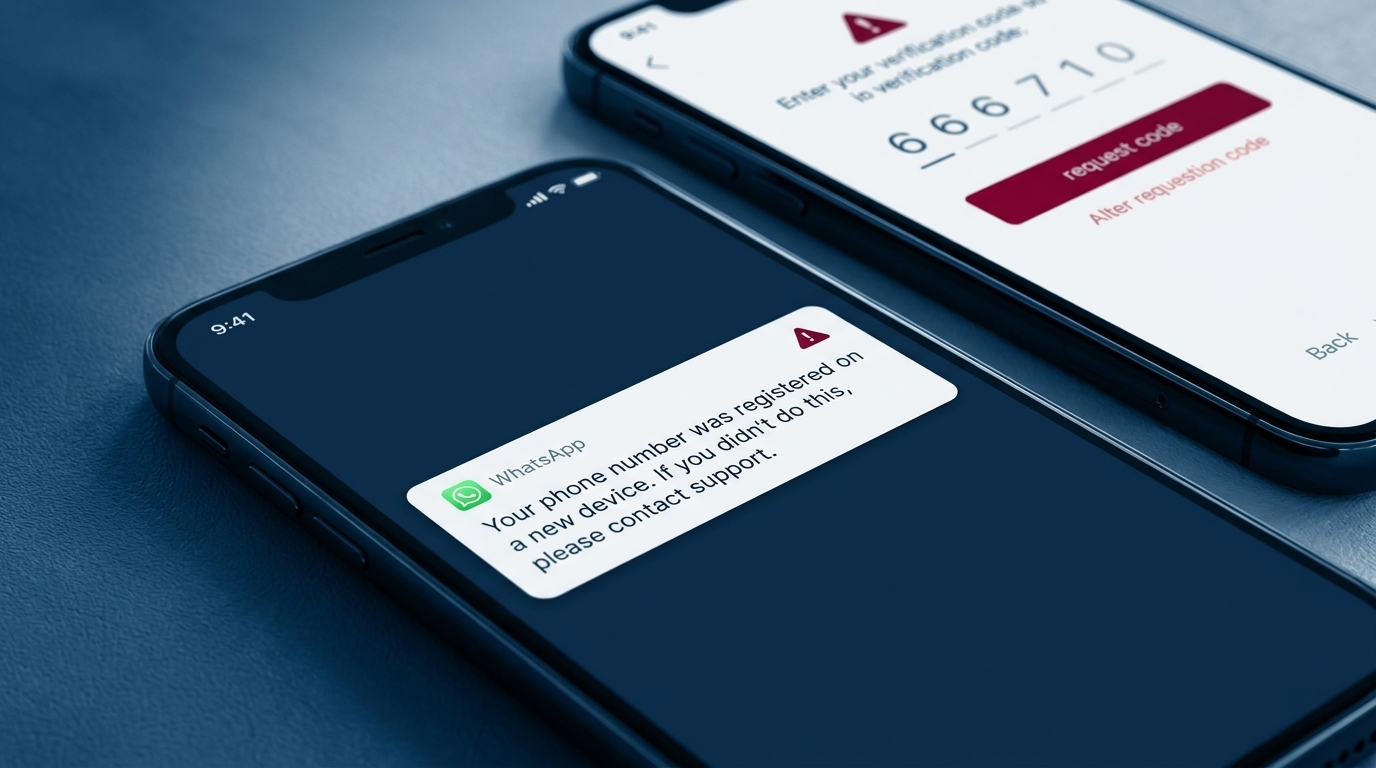


How does Adversary-in-the-Middle proxy-phishing defeat standard MFA?
Adversary-in-the-Middle (AiTM) architecture functions as a transparent reverse proxy positioned between the targeted employee and authentic cloud identity providers like Microsoft Entra ID. When an employee interacts with a malicious link, the proxy server dynamically retrieves genuine login interfaces, intercepts entered credentials, and forwards multi-factor authentication challenges to the legitimate authentication service in real time.
Once the user completes the verification step (whether through an authenticator app, push notification, or passcode), the authentic identity server issues a valid session cookie. The proxy intercepts this session token before passing it to the victim, allowing the attacker to hijack the active session immediately. Token theft accounted for 31% of Microsoft 365 breaches in 2025, proving that standard MFA alone is no longer a silver bullet against modern social engineering.
- Lure Delivery: Attackers direct targets to a reverse proxy domain using role-tailored phishing vectors.
- Real-Time Relay: The proxy relays credentials and MFA prompts back and forth between the user and the authentic identity provider.
- Token Capture: Upon successful authentication, the identity provider issues a session cookie, which the proxy intercepts.
- Session Replay: The attacker imports the stolen token into their own browser to access enterprise cloud applications without triggering secondary authentication.
Because the identity provider receives authentic authentication responses and issues a legitimate session token, traditional security controls treat the attacker as an authorized user. Defending enterprise cloud environments requires shifting beyond static MFA reliance toward phishing-resistant authentication, token protection policies, and multi-channel simulations designed around modern Browser-in-the-Middle attack vectors.
What technical mechanisms enable session cookie hijacking during live logins?
Adversary-in-the-Middle (AiTM) architecture relies on transparent reverse-proxy frameworks such as Evilginx, Tycoon, and Mamba to position an attacker server between the victim and the legitimate cloud Identity Provider (IdP). Rather than serving static clone pages that merely harvest passwords, these Phishing-as-a-Service toolkits proxy live HTTP requests and responses in real time. When a target user navigates to the malicious link, the proxy fetches the genuine login form from Microsoft Entra ID or Okta, presenting authentic TLS certificates and dynamic challenge prompts to the browser.
- Domain interception: The user lands on an attacker-controlled sub-domain hosting the reverse proxy, which mirrors the target organization's authentic IdP portal.
- Challenge relay: The reverse proxy relays user credentials, CAPTCHAs, and multi-factor challenges directly to the upstream service, keeping the live session active.
- Session cookie capture: Once the user completes the MFA prompt, the IdP generates an authenticated bearer token (such as ESTSAUTH or ESTSAUTHPERSISTENT) and sends it back through the proxy.
- Token theft and replay: The proxy logs the session cookie while forwarding it to the victim, allowing the attacker to clone the token and import it into an isolated browser session.
By capturing valid session tokens at the end of a successful login sequence, the attacker bypasses passwords, OTP codes, and push notifications entirely. The stolen bearer token grants direct session authorization, allowing adversaries to access corporate cloud applications, download sensitive data, and configure persistent mailbox rules without triggering re-authentication prompts. Industry data confirms that 84% of accounts compromised through these techniques had active MFA enabled. Similar mechanics also power Browser-in-the-Middle vectors, making session cookie hijacking a primary threat to modern cloud identity perimeters.
Why are traditional email filters and MFA prompts failing to stop token theft?
Automated Adversary-in-the-Middle (AiTM) phishing kits generate roughly 40,000 token theft incidents daily across Microsoft environments, with 84% of compromised accounts operating under active Multi-Factor Authentication (MFA). Traditional Secure Email Gateways (SEGs) rely on static domain reputation lists, signature matching, and initial URL inspection. However, modern Phishing-as-a-Service (PaaS) platforms bypass these controls by deploying reverse proxies that fetch real-time content directly from authentic identity provider login portals like Microsoft Entra ID or Okta.
When a target clicks an AiTM link, the reverse proxy sits transparently between the user's browser and the legitimate identity provider. The gateway sees traffic routed to freshly registered or compromised infrastructure that has no prior bad reputation score. Because the underlying identity provider handles the actual password check and MFA challenge, the email security filter sees no malicious executable, no suspicious script download, and no brute-force anomaly. Similar evasions occur in Browser-in-the-Middle campaigns, where the user's interaction occurs within a legitimate-looking frame while session credentials are stolen on the server side.
- Dynamic Domain Infrastructure: Attackers rotate ephemeral domains and use automated TLS certificates, rendering static blocklists obsolete before reputation feeds update.
- Legitimate Authentication Pass-Through: The reverse proxy forwards genuine MFA challenges to the user, ensuring push notifications and FIDO/TOTP prompts behave normally.
- Real-Time Session Capture: Upon successful authentication, the proxy harvests the session cookie (e.g., ESTSAUTH) before encrypted traffic reaches the victim, bypassing credential checks entirely.
For CISOs and security operations teams, this shift renders traditional MFA reliance incomplete. Because session cookies bypass post-login authentication checks, security posture must expand beyond perimeter email inspection to include token protection policies, continuous session risk analysis, and role-specific simulations that train employees to identify structural lure anomalies.
How do attackers exploit stolen session tokens for post-compromise activity?
Once an Adversary-in-the-Middle (AiTM) proxy captures a valid session cookie, secondary authentication requirements disappear. Attackers immediately import the session token into a standard browser session to bypass multi-factor authentication (MFA) and establish active enterprise access. Driven by commercial Phishing-as-a-Service infrastructure, AiTM campaigns grew by 146% over recent reporting periods, reflecting a industry-wide shift in how threat actors monetize initial access. Instead of lingering passively, post-compromise playbooks execute within minutes to ensure persistent access before security teams detect the anomaly.
Key post-exploitation playbooks following session hijacking
- Secondary MFA Device Registration: Attackers immediately enroll new FIDO2 keys or authenticator apps under their control within the user's portal settings, maintaining access even after the original session token expires.
- Automated Inbox Rule Creation: Compromised mailboxes are updated with hidden forwarding and deletion rules that automatically route security alerts, password resets, and vendor invoices away from the inbox.
- OAuth Application Consent: Malicious enterprise applications receive broad graph API permissions, establishing persistent tenant access that survives session revocations and password changes OAuth consent flows.
- Business Email Compromise (BEC) Fraud: Threat actors inspect active conversation threads to inject altered payment details into pending transactions, intercept wire transfers, or execute fraudulent payroll modifications.
Because post-exploitation activity originates from an authenticated session token, these actions frequently blend into benign operational traffic. Defending cloud environments against token theft requires pairing strict Conditional Access re-authentication policies with active session revocation capabilities and continuous threat monitoring.
Which architectural controls effectively stop AiTM attacks in Microsoft 365?
Traditional multi-factor authentication methods like SMS, push notifications, and TOTP apps fall short against reverse proxies because attackers relay credentials and session cookies transparently in real time. Neutralizing Adversary-in-the-Middle (AiTM) threats requires cryptographic binding between the user authentication session and the underlying device hardware, preventing stolen session tokens from being replayed outside the authorized context.
Key technical countermeasures against session hijacking
- FIDO2 Passkeys & CBA — Mechanism: Binds origin domain to cryptographic keys during authentication. · Mitigation: Prevents proxy interception because credentials cannot be forwarded to malicious origins.
- Entra ID Token Protection — Mechanism: Cryptographically binds OAuth tokens to the specific device platform key. · Mitigation: Blocks stolen session cookie replay on unauthorized external devices.
- Conditional Access & Device Controls — Mechanism: Requires managed, compliant devices and restricts device code flows. · Mitigation: Eliminates unmanaged entry points and phish-prone authentication pathways.
Enforcing strict Conditional Access policies serves as the structural foundation. CISOs must mandate compliant, Intune-managed devices for cloud access while disabling legacy protocols and device code authentication flows, which attackers frequently exploit to bypass browser protections. When paired with Microsoft Entra ID Token Protection, primary refresh tokens (PRTs) and session cookies remain tied to the hardware security module (HSM) or TPM of the endpoint. Even if an adversary intercepts a token through a rogue proxy, the token proves unusable on any non-registered host, neutralizing credential replay attempts at the network boundary.
How can security teams build human resilience against advanced proxy lures?
Defending cloud tenants against session token theft requires pairing protocol-level controls with dynamic human defense. Technical controls like FIDO2 WebAuthn keys or device-bound session tokens break the mechanics of reverse proxies by cryptographically tying authentication to the legitimate domain. CISA categorizes FIDO2 and WebAuthn as the gold standard for phishing-resistant authentication because traditional SMS codes, app push prompts, and time-based one-time passwords remain vulnerable to real-time interception. However, technical migration across legacy applications takes time, and attackers routinely adapt by shifting from credential harvesting to multi-channel social engineering across SMS and voice channels.
- Combine protocol controls with continuous multi-channel simulations across email, SMS, and vishing to expose users to realistic session-hijacking techniques.
- Train employees to recognize subtle operational anomalies, such as unexpected MFA prompts during active sessions or minor URL deviations in embedded webviews.
- Deliver role-specific microtraining in the flow of work immediately after a user interacts with a proxy lure, reinforcing reporting habits while context is fresh.
- Measure organizational resilience through threat reporting speed and reporting volume rather than passive quiz completion rates.
Because static awareness programs fail to prepare users for live proxy schemes like Browser-in-the-Middle attacks, security teams must embed continuous practice directly into daily workflows. Deploying automated threat simulations through the revel8 Platform allows security operations to expose employees to role-specific attack scenarios enriched with current threat intelligence. When employees encounter realistic lures in their inboxes or messaging feeds, immediate microtraining turns potential security breaches into instinctive reporting habits. Shifting focus from passive compliance to active threat detection builds lasting human resilience across the enterprise.